

Buying a SIM Card in Myanmar/Burma

This article is now several years old and out of date. Due to ongoing government “do not travel” advisories, we’re unable to return to Myanmar to update it, other than to say that internet censorship and shutdowns make connection unreliable or impossible in at least some parts of the country.
Changes are afoot in Myanmar’s mobile space. After years of only having MPT, the government-owned telecom as an option, the first foreign company has arrived in the “Golden Land.”
With Qatar-based Ooredoo recently launched and Telenor Myanmar on the way, there is finally some competition and a look into the future of what will likely be a rapid change here in the country.
There have been some challenges, however. An Ooredoo spokesperson said they have even had to use oxen to carry equipment to some locations as they deploy their network. Welcome to Myanmar.
For those keeping track, our previous look at buying a SIM card in Myanmar offered few options for the traveler passing through. The temporary “traveler” SIM would run you $20 with expensive call rates and no options for data. While hardly amazing now, at least we’re heading in the right direction.
Prices are in Myanmar kyat. At the time of writing, the exchange rate is approximately 1030 kyat to $1.00 USD but it’s been unstable recently.
Companies
For years, you only had the state-owned MPT as an option (if you could even call it an option). Qatar-based Ooredoo and Norway-based Telenor both launched in late 2014, bringing reasonable-cost mobile service to the country for the first time.
We’re recommending Ooredoo instead of MPT because of their low-cost SIM card (1500 kyat vs ~5000 kyat) and much better English-language support. Coverage is hardly perfect, though.
How to Buy a Prepaid SIM Card in Myanmar
It’s best to visit one of the Ooredoo stores in downtown Yangon or Mandalay for the highest chance of English help, but seriously, everyone and their dog sells Ooredoo SIM cards and top-ups. I wasn’t asked for any ID, and was in and out of the random mobile phone shop in less than 5 minutes.
You *may* need to provide your passport (though it’s unlikely), and you will require an unlocked phone or have to buy a phone in-country. If your phone is currently locked, you may be able to have your phone unlocked at a general mobile store if you don’t mind potentially voiding your warranty.
Prepaid SIM and eSIM Costs
1500 kyat will get you a SIM card ready for 3G data access.
Welcome bonus varies, but currently you get a 500 kyat credit and 10MB of data with activation.
National rates:
- Calls (in network) 25 kyat / min
- Calls (all other) 35 kyat / min
- SMS 15 kyat / msg
- Data 10 kyat / MB (1000kyat / 100MB)
Ooredoo’s international rates can be surprisingly reasonable, depending on where you are calling. You’ll find per minute rates of 100 kyat/min to the USA and Canada, while other countries hover around the 500 kyat – 700 kyat/minute mark.
SMS runs about 125 kyat/message. You can find the overseas rates for Ooredoo here.
If you don’t already own a cell phone or yours isn’t unlocked, you can buy an inexpensive phone in Myanmar starting at ~20000 kyat.
Topping Up
With an extremely strong marketing push (you’ll find Ooredoo signs EVERYWHERE), it’s easy to find a top-up at a local shop on the street.
Available in 1000, 3000, 5000, and 10000 kyat cards, they are good for 30 days.
Get regular updates from the world of travel tech and remote work
News, reviews, recommendations and more, from here and around the web
Coverage and Data Speeds
Coverage for Ooredoo is rapidly changing, but with several tourist areas left with no coverage, it currently leaves much to be desired for the traveler.
Service can be expected in Yangon, Mandalay, Bago, Nyapyidaw. Rural areas (including all of Shan state) are currently without service.
In short: cities and the major highways between them have coverage, but don’t expect it anywhere else. We expect this to change rapidly throughout 2015 and onwards.
Even in the cities, the signal has trouble penetrating the walls of buildings, so expect a lot of missed calls. It’s well-known with locals here that you have to go outside to make a call.
I missed both of the test calls made to me since I was inside a building, receiving a “missed call” text when I walked back to a place with coverage.
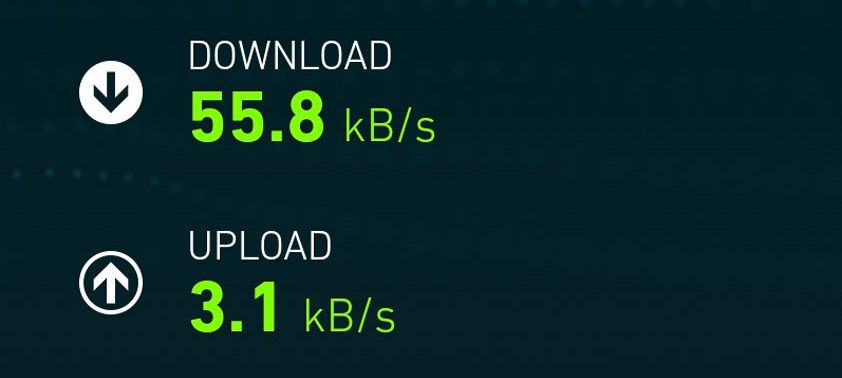
The UMTS 900/2100 data speeds varied a lot through a few tests over more than a month, but ended up being better than expected. This variation is likely due to congestion on the network with it being so new. I expect it to improve and generally become more reliable in the coming months.
Check out our guides to SIM cards and eSIMs in 70+ other countries here.




Great tips! It was extremely difficult for me to obtain a SIM card when I was in Myanmar in 2014. Glad to hear it’s a bit easier now. 🙂
Good to recommend Ooredoo so that more money can go to support international terrorism. It’s not always about the cheapest deal but should also be about a companies ethics
Who is Thomas and why is she being such a dick?
heading out there in 2 weeks. will report my findings on how easy it is to get a ooredoo or other sim, and data coverage as i move around yangon and napyidaw.
I need to do a phone interview while in Myanmar. I don’t know exactly where I will be at the time but I happy to ensure I am in a major city. Do you think a local sim would be reliable enough for this important call from Australia or should I organise them to call me on a hotel landline?
If it’s important, I’d do it on a landline. It’s still Myanmar… 🙂
The speedtest screenshot you showed on the left is a screenshot of a speedtest you did in Chiang Mai, Thailand, NOT in Yangoon. Yes, the server used for the speedtest connection is in Yangoon, but the device which this screenshot is taken from was not in Yangoon at the time of the screenshot. Please look at the coordinates, 18.801 98.969 is in Chiang Mai.
The second one is correct, the coordinates (16.777 96.160) show that the speedtest was done in Yangoon, near the city hall.
I plan to go there by the end of November. This article helps me a lot, despite the wrong screenshot. Thanks!!
Yikes! Thanks for the catch.
I must have gotten another screenshot mixed up at time of posting. I removed the one I took when I arrived in Chiang Mai.
I’ll be back in mid Nov as well. We’ll see what has changed by then… (hopefully speed & reliability!)
I m heading for Dawei in mid december, any news on the coverage in Southeastern Myanmar nowadays? Nice tips indeed.
@xavier You’ll probably want MPT. I doubt either of the other companies will have much of any coverage down there.
What is the avaliability now Feb 16 of sim cards
Just came back from Myanmar (April 2016). Bought a MNP sim card at the airport for about $1.50US, and a $5 dollar loading card. Had 4G coverage pretty much everywhere I went (Yangon, Bagan, Mandalay, Pindaya, Inle Lake (Yes, even on the lake itself). Worked perfectly. Didn’t need a copy of my passport.
Thanks for the update, Chris and this post, Dustin! I look forward to heading to the Golden Land in a week!
Sorry – meant MPT.
Ooredoo = terrorist supporters.
go with Telenor….
Mobile network coverage are getting better and if you are in Yangon I can vouch that you will get pretty good coverage for both calls and data.
Getting the sim card could be a hit and miss due to language and long waiting time as there are allot of people lining up to get one at the airport.
Alternatively,I guess you could order the sim cards online and have the card delivered to you before before you reach Myanmar
Telenor and Mytel have the best 4G Availability in Q4-2019.