

All You Need to Know About Buying Electronics Overseas

There are many reasons you may want (or need) to buy electronics overseas. Maybe your camera died on an ocean dive, maybe someone stole your smartphone, or maybe the baggage handlers crushed your laptop in transit.
Or maybe you just need an excuse to buy something new and awesome. Whatever the reason, here’s the scoop on the pros and cons of buying a new gadget in another country.
Why You Want to Buy Electronics Overseas
Ever see an ad online about a super-cool phone that your cell provider at home doesn’t sell? If not, do you like paying less money for stuff? Thought so.
Save Some Money
You can get yourself a triple-whammy of savings buying abroad.
Save on Taxes You’d Have to Pay at Home
If your country or state likes to pile on the taxes, buying your gadget overseas may save you some coin. It’s not hard to save 20% or more just for this reason alone.
Get a Refund on Local Taxes as You Leave the Country
You can often claim the local sales taxes back at the airport just before you fly out of a country or region.
Keep in mind you may have to fill out some forms and jump through some hoops, and there’s often a long line of people waiting to do the same. Follow the steps carefully to collect your refund as you leave.
Some Places Just Sell Stuff for Less
It makes sense that stuff just costs more in a place like little New Zealand (far away islands) than the consumer spending superpower of the world (USA).
In some countries, the expected profit margins are less as well, so fat deals can often be had in Southeast Asian countries such as Malaysia and South Korea.
Even for companies like Apple that are based in the US, it can still be cheaper to buy their products overseas when you factor in local tax rates. That’s especially true if you can get that tax back when you leave the country.
We did a deep dive into the cheapest countries to buy Apple gear around the world, and found that on more-expensive items like Macbooks and iPhones, you can save hundreds by buying them in places like Australia or Japan as you’re passing through.
Rule of Thumb
Electronics are typically cheapest in Japan, Malaysia, & the USA, and often most expensive in the UK and continental Europe.
Get Things Before They’re Released at Home
Companies like Samsung and Huawei often release their products first, or only, in their home markets.
Many models of Samsung phones and tablets are available in South Korea and other Asian countries long before they make it to the US or Europe. The majority of Huawei’s and Xiaomi’s gear never gets to the United States at all.
Models are often different between countries as well. Smartphones sold in the United States usually only come with a single SIM card slot, for instance, due to pressure from local cell companies. Elsewhere in the world, the same model of phone will often be dual-SIM.
One thing’s for sure though: Apple always launches in the USA before or on the same day as the rest of the world.
Rule of Thumb
If you like the bleeding-edge of tech, you might be able to get the coolest new gadget to take home before it’s even released there.
What You Should Consider Before Buying
It’s not all sunshine and lollipops buying new electronics overseas, however.
Warranty
While some product lines and manufacturers have embraced international warranties, it’s not all traveler-friendly.
Laptops are the best of the bunch, with many major manufacturers offering an international warranty of some kind. Typically you just need to call their 1-800 number and they’ll direct you where you go.
Cameras are complicated. Companies like Nikon have separate divisions in each country, so a Nikon DSLR lens comes with a 5-year local warranty, but only a 1-year international warranty. Similarly, the body has a two-year warranty, and one year internationally.
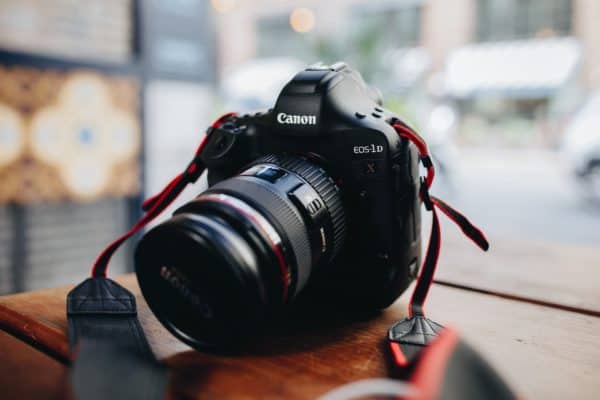
Canon makes it murkier still, with warranties valid in both the USA & Canada (if purchased there), but not outside.
Mobile phone warranties are horrible for travelers. To stop people from importing phones from other countries, and to simplify the warranty procedures of the massive number of models out there, phone warranties are typically only valid in the country or region they were purchased.
Rule of Thumb
Check the warranty before you buy.
Customs
Remember all that money you saved by not paying the VAT in the country you bought from? When you head home, your country may want that money and more.
While it varies from country to country, when you pass through customs at home, you may be importing your new gadget into the country.
Check your country’s limits (often it’s the total value of what you’re bringing in), as the customs officials may demand to see a receipt, and charge the tax you would have paid if you bought it at home.
Some products might also be charged an additional duty for importing. Check your government’s customs website before you head back to see what is allowed.
Rule of Thumb
Do your research. If you don’t, you may end up paying out more than you saved.
Get regular updates from the world of travel tech and remote work
News, reviews, recommendations and more, from here and around the web
The Little Things
Just like foreign food that looks the same as what you’re used to at home but tastes a little different, your new toy can have a few quirks versus the local version.
- Does the power plug of your new gadget match what you use at home?
- Does the laptop come with a keyboard layout you’re used to?
- Does the smartphone support your local cellular frequencies?
- Does the GPS come with maps preloaded for your country?
Are you buying a knockoff? Chances are you aren’t, but if the price is suspiciously low, be wary.
Rule of Thumb
Ask to open the box so you know exactly what you’re getting before you whip out your credit card.
Conclusion
If you’re buying electronics overseas, do the math and a little research beforehand. Get it right, and you could find yourself with both a new gadget and a little extra money in your pocket as well.
Image via Peter Zoon



One thing I left out, but that a reader mentioned was region coding. If you’re buying a DVD/Blue-ray, or game system, it may be coded for one country or region, and unable to play games/movies from another part of the world.
This goes for DVD / BR discs you buy abroad as well.
But who buys physical media anymore (or their players) anyways? 🙂
Your right on the laptops for sure. They do give give you an option to change your “Region Code” 5 times if you travel to another country. Sucky part is once you have changed the region code 5 times, that’s it. Your 5th time you are stuck with the last region code. If you can find a laptop that has somehow been set to ” 0 ” that is universal, works everywhere. You will be lucky or need a hacker. 🙂
There are a couple of other way’s around the region code, but don’t want to get into that here. Start w/ researching Wikipedia and then hit Google. This is just what I hear, I would never try these things..LOL
Great article, many don’t know that the plug adapter also needs to convert 110-120 to 240v.
I never even thought about the taxes they load us down with in the States, good tip.
It’s best to go with a universal adapter & dual voltage connector. they are cheap now at approx. $40.00 but could save you a lot more.
Magellans http://www.magellans.com/store/Adaptors___Converters?display=view_all has a huge assortment of all adapters and a drop down chart of the type each country uses. i have even gone as far as having a friend in the Philippines take a pic of the outlet on her wall. PH has three diff. types of outlets. Magellans also carries the Airplane Charger, but these still seem rare, except for 1st class.
I have see some of these recently as well. I’m not sure how much use they really have with today’s gadgets though. None of my gear (or anyone I know) has ever needed a voltage adapter now that most electronics are shipped with power adapters good for both voltages. I wrote about it more in depth here. https://toomanyadapters.com/powering-your-gadgets-while-you-travel/
In the past, it was most often used for shavers and hair dryers. Not sure about these days. What have you needed it for?
@Dustin, GPS’s from the States will usually require a map purchase if outside of Canada & U.S. some Central American countries are okay.
I have a basic GPS that I can Purchase the Malaysian map for at $75.00. For me, it’s cheaper to buy a new GPS preloaded with Malaysia then purchasing the map in the U.S. just a tip. 🙂
what about if i wanted to get an unsubsidized pre-unlocked phone?
Often you can get yourself a much better selection of unlocked, un-subsidized phones when abroad vs in North America. One thing to be wary of, is all of the different frequencies they use in other parts of the world.
The higher-end smartphones typically work with all the main frequencies used worldwide (typically called a “world phone”), while some of the cheaper ones may not. If you’re making a big investment, or planning on taking it to another part of the world, it’s something to consider.
You might want to add “Don’t buy incredibly cheap $500 laptops”. I say this because, as someone with some geek skills, I invariably get asked by people “Can you fix my great laptop. It was a great deal last month in HK. Only $499. It stopped working”.
Great post! I found some things to not be much cheaper in Malaysia and Singapore, but then it does really depend on the product. Some places, like amazon in the USA is just cheaper no matter what
You got it Jade. I think many people assume things in Asia are a quarter of the price of the USA, when often it’s maybe 20% less when taxes are taken into consideration. Just as often it’s the same, or maybe a bit more. Best to do your research before!
Hey Dustin, you took the words out of my mouth. I figured getting a DVD player, even a portable one was going to be a bad deal, due to the region encoding. It looks to me as though even God hated the region coding system, as no sooner had it come out then came along workarounds to the region encoding. So many people have bought DVDs overseas, only to find out the hard way that they wont play in their DVD player at home. This region BS is something that needs to die a quick death.
Careful of the region coding and also the format (PAL vs NTSC). If you buy a player, try to get one that is region free AND converts NTSC to PAL or vice versa. Thanks for the comment!
Not all is lost. Online has a habit of selling region free players. I would not recommend getting a DVD player overseas unless it is region free.
Having recently tried to buy a Samsung Galaxy S3 in China, I think you’re missing the biggest problem when buying a mobile in a different country, namely localisation.
Samsung provides different firmware for different countries and as I found, this can mean a crippled OS. In my case it meant that I had just bought a phone that couldn’t install English-language apps! Apple does something similar and I’m sure the other mobile-phone manufacturers do too.
Having recently tried to buy a Samsung Galaxy S3 in China, I think you’re missing the biggest problem when buying a mobile in a different country, namely localisation.
Samsung provides different firmware for different countries and as I found to my cost, this can mean a crippled OS. In my case it meant that I had just bought a phone that couldn’t install English-language apps! Apple does something similar and I’m sure the other mobile-phone manufacturers do too.
Hey James,
Good point, do your research before your hand over your cash. I’ve heard some stories about the Galaxy S3 being overly locked down from a couple of carriers, though never with the general OS. Most phones will give you the option to change languages and whatnot right in the menus. Worst case, you might have to load a generic ROM for your Android device.
One thing I’m not keen on with the Google Play store, is that it gives you access to the country store based on your SIM card, not your language or main Google account settings. For example, I bought my Galaxy Nexus in Thailand, and since I had a Thai SIM, it gave me the Thai store (not the Canada/USA store I wanted). You need to root to get around this. Was this your issue?
So where is that beautiful city picture taken at and when? What a good camera that photographer has!
Check out the attribution link at the bottom of the post — it has the location, date and other info listed. 🙂
Hi my teen girl is going to Singapore an would like to buy she self a cell ph will it wrok then she get back to new Zealand?
It’ll almost certainly work for calls, texts, and 2G/3G data. It’ll probably work for LTE data as well, but there’s more variability between regions there, so if she wants those faster speeds, that’s something she’d need to check.